AI Generated Apps AI Code Learning Technology
Artificial Intelligence is changing how we learn, work, and create. Today, AI tools help writers, scientists, and developers solve real problems. Because this field moves fast, beginners often feel overwhelmed by choices. However, a clear roadmap can make learning manageable and even fun. This guide offers a beginner’s roadmap to AI through curated tutorials.
It groups practical blog lists, step-by-step how-tos, and hands-on projects. As a result, you can move from simple experiments to full workflows. You will explore machine learning basics, model testing, and data visualization tools. For example, tutorials on BudouX cover multilingual text wrapping and readability. Other guides show how Datashader renders millions of points for clear plots. Therefore this roadmap blends theory with practical code, sample projects, and resources.
We keep language simple, explain concepts stepwise, and give next steps. Start here to build useful skills in AI, machine learning, and model deployment. Let’s dive in.
Key Artificial Intelligence tutorials and blog resources
HackerNoon and 500 Artificial Intelligence blog posts
HackerNoon published a large curated list of 500 blog posts about Artificial Intelligence. Because the list orders posts by reading time, readers can find quick introductions or deep dives. As a result, beginners can map topics by effort and interest. Moreover, the HackerNoon collection links to practical tutorials and case studies. For example, you will find writeups on BudouX multilingual text wrapping and Datashader visualization. Explore HackerNoon here: HackerNoon.
LearnRepo and Artificial Intelligence reading lists
LearnRepo.com ranks the most read technology posts across sites. Therefore it surfaces high‑value tutorials and guides for faster learning. Beginners benefit from curated paths, because they avoid fragmented searches. LearnRepo helps you discover stepwise tutorials, example notebooks, and community favorites. Visit LearnRepo: LearnRepo.
How these resources help beginners build real skills
These collections guide learners from concept to practice. For instance, HackerNoon links often point to hands‑on notebooks that run in Google Colab. Consequently, you can run examples without complex setup. See Google Colab for live code: Google Colab.
Additionally, industry and application articles add context. For example, read why AI multiplies startups here: why AI multiplies startups and why governance matters here: why governance matters. For creative production use cases, check AI audiobooks coverage here: AI audiobooks coverage.
Benefits of these resources
- Fast topic discovery through curated lists and rankings
- Numerous hands‑on tutorials and runnable notebooks
- Real examples covering data visualization and NLP tools
- Community‑vetted posts that highlight common pitfalls
- Clear progression from basics to model deployment
Related keywords and concepts
Artificial Intelligence, machine learning basics, BudouX, Datashader, multilingual text wrapping, data visualization, Google Colab, model testing, model deployment.
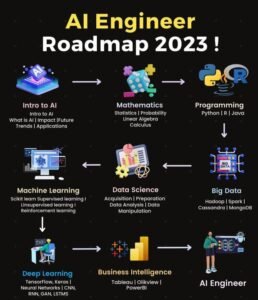
Artificial Intelligence tools featured in tutorials
BudouX and Datashader appear in several beginner tutorials because they solve concrete problems. BudouX focuses on smarter text wrapping for languages without natural spaces. According to the article, “BudouX to bring intelligent, phrase-aware line breaking to languages where whitespace is not naturally present, such as Japanese, Chinese, and Thai.” Sana Hassan authored the BudouX tutorial for Marktechpost. Therefore the guide shows how to parse HTML, insert invisible breakpoints, and improve readability in tight layouts. In practice, BudouX helps developers build better multilingual websites and mobile UIs. For example, content platforms and e-book renderers use phrase-aware wrapping to avoid awkward breaks.
Datashader helps when plots contain millions of points. The article calls it “a powerful, high-performance visualization library for rendering massive datasets that quickly overwhelm traditional plotting tools.” As a result, Datashader lets you aggregate and render huge arrays without losing detail. Tutorials show pipelines using NumPy and xarray, and they run smoothly in Google Colab. Consequently, data scientists use Datashader for geospatial analysis, telemetry dashboards, and scientific visualization. In finance and research, it reveals patterns dense scatter plots hide.
How to practice
Start with the Marktechpost walkthroughs by Sana Hassan, because they pair explanation with runnable notebooks. Also, run examples in Google Colab to avoid local setup. As a result, you learn by changing code and observing outputs immediately.
Tool highlights
- BudouX: phrase-aware line breaking for Japanese Chinese Thai
- BudouX: translates HTML and inserts invisible breakpoints
- Datashader: renders millions of points efficiently
- Datashader: integrates with NumPy xarray and Matplotlib
- Practical use cases: multilingual publishing geospatial dashboards scientific plotting
Quotes from the tutorials
- “Let’s learn about Artificial Intelligence via these 500 free blog posts.”
- “The post How to Build Smarter Multilingual Text Wrapping with BudouX Through Parsing, HTML Rendering, Model Introspection, and Toy Training appeared first on MarkTechPost.”
Quick comparison: BudouX versus Datashader
Below is a clear table that highlights differences and use cases for two tools featured in our tutorials. Therefore beginners can pick the right tool for their project.
| Category | BudouX | Datashader |
|---|---|---|
| Primary function | Phrase-aware text wrapping for languages without natural spaces | High-performance rendering and aggregation of very large datasets |
| Key features | Intelligent line breaking, HTML parsing, invisible breakpoints | Point aggregation, rasterization, fast rendering pipelines |
| Use cases | Multilingual web and mobile layouts, e-books, publishing | Geospatial visualization, telemetry dashboards, scientific plots |
| Supported languages or data types | Japanese Chinese Thai and other no-space languages | Large point clouds dense arrays raster and grid data |
| Typical platforms | Web frontends static site generators server-side renderers | Python ecosystems Google Colab Jupyter notebooks |
| Notable authors or contributors | Sana Hassan MarkTechPost (tutorial author) | Datashader core contributors within the HoloViz community |
| How beginners should try it | Run MarkTechPost notebooks and test HTML samples | Use Colab notebooks with NumPy xarray example pipelines |
| Related keywords | Multilingual text wrapping HTML rendering model introspection | Data visualization Datashader NumPy xarray Matplotlib |
Use this table as a quick reference. As a result you can decide which tool fits your learning path.
Conclusion
This beginner’s roadmap gives a clear path to learn Artificial Intelligence fast and confidently. By following curated tutorials and blog lists, beginners build practical skills step by step. Because the guide pairs theory with runnable notebooks, learners move from concepts to working projects. As a result, you gain confidence with tools like BudouX and Datashader.
AI Generated Apps provides intelligent AI driven solutions across automation, education, and information platforms. Their offerings include ready made applications and custom AI solutions for real workflows. Therefore teams and solo learners can speed deployment and test ideas without heavy engineering overhead. For example, you can adapt prebuilt automations or request tailored models.
Visit aigeneratedapps.com for tools, tutorials, and case studies. Also follow their Twitter/X at @aigeneratedapps and Instagram at aigeneratedapps for updates. For community posts and company news, follow Facebook at https://www.facebook.com/aigeneratedapps. Start small, learn consistently, and build meaningful AI projects. Reach out to their team for demos and integration help.
Frequently Asked Questions (FAQs)
What is Artificial Intelligence and why start learning it now?
Artificial Intelligence refers to systems that perform tasks needing human intelligence. It includes machine learning, data processing, and model deployment. Because AI affects many industries, learning it opens career and project opportunities. For instance, simple classification and regression show core ideas quickly.
How should a beginner start learning AI?
Start with fundamentals: Python, basic statistics, and machine learning concepts. Next, follow curated tutorials and blog lists for guided paths. Then try small projects like image or text classifiers to apply concepts. For hands-on practice, run runnable notebooks in Google Colab to build confidence. Use learning paths that mix reading, videos, and hands-on labs.
Which tutorials and tools suit beginners?
Pick stepwise tutorials with runnable code and clear explanations. BudouX teaches multilingual phrase-aware text wrapping, while Datashader shows high-performance visualization of massive datasets. These tools teach practical problem solving, not only theory. Also check MarkTechPost walkthroughs by Sana Hassan for practical examples. Read author notes, inspect code, and run altered inputs to see behavior.
When should I use BudouX versus Datashader?
Use BudouX to solve multilingual layout and text wrapping issues. Use Datashader to visualize millions of points and dense arrays that overwhelm normal plots. Therefore choose the tool that matches your data and output needs. Also prototype in Colab to confirm performance before full deployment.
What are best practices for beginners?
Learn by doing, keep experiments small, and document each step. Also consider governance ethics and reproducibility early. Keep ethics and data privacy in mind while collecting datasets. Finally, read curated blogs, reuse notebooks, and join communities to accelerate learning. Finally set measurable goals, such as building a demo in four weeks. Stay curious and persistent.